Effective web design begins with business goals.
It starts by understanding the business challenges. By addressing consumers' needs and aligning with strategy,
we create a powerful tool for your business growth. Learn about our process or get in touch to discuss your project.
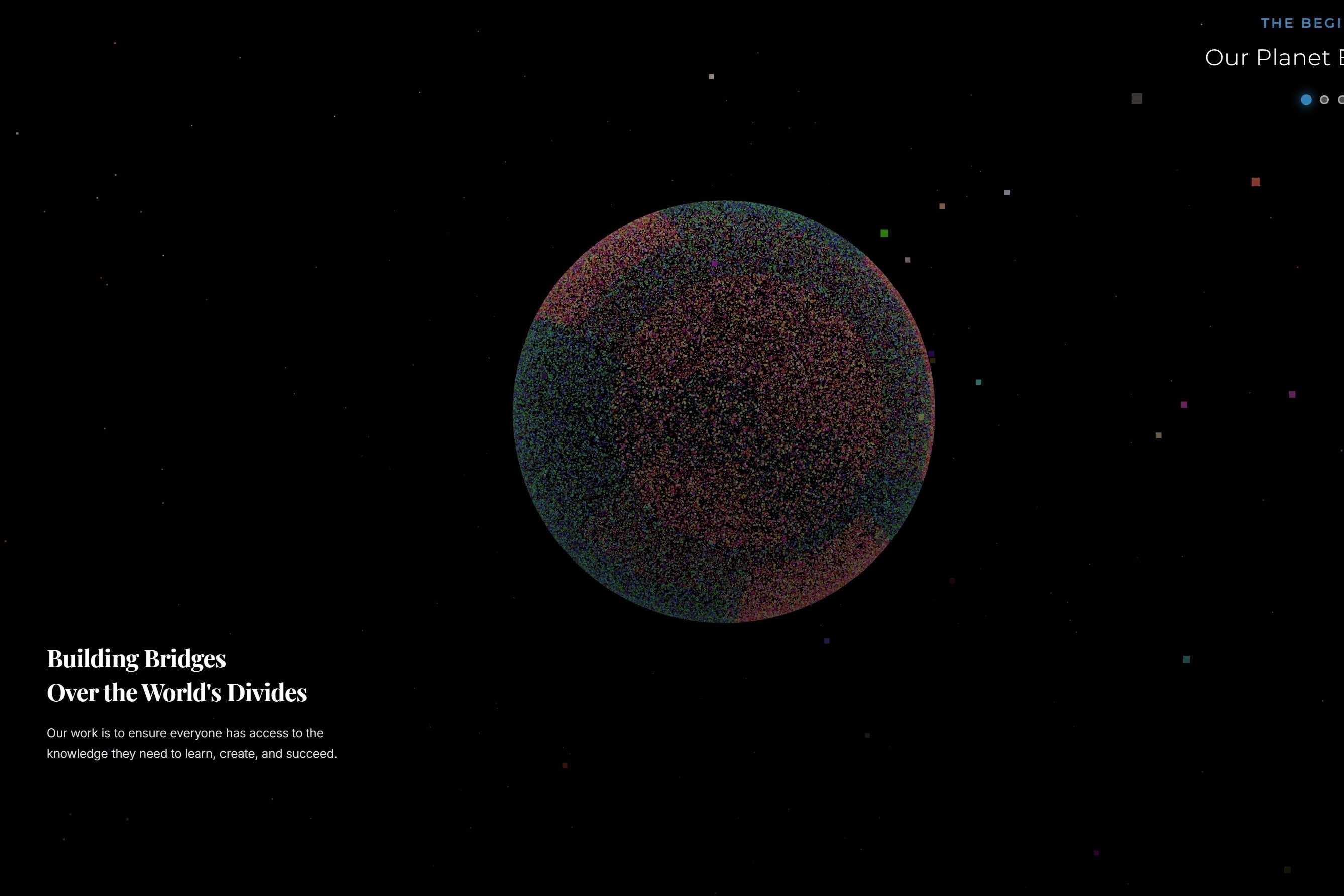
NRIDL stands for The National Institute for Democratized Learning. They are a hybrid organization operating at the intersection of an educational non-profit, a technology research lab, and a strategic think-tank.
Mission & Vision:
Mission: To democratize access to knowledge, empowering individuals, communities, and small businesses to thrive in a rapidly changing world.
Vision: To create a more empathetic and dynamic global community where digital opportunity is a bedrock of human experience.
Key Pillars & Services:
They operate across three distinct but connected verticals:
Literacy & Education: Initiatives like StoryBee.Space (open-access digital books for children) and financial/AI literacy programs.
Digital Futures (High Tech): Research into Augmented Reality (AR), semiconductors, and robotics, focusing on how these technologies can serve communities rather than just corporations.
Heritage & Culture: Preserving indigenous knowledge and cultural history against the threat of digital erasure.
Target Audience:
Primary: Donors, grant-makers, government bodies, and educational partners (who need to see organizational stability).
Secondary: Educators, researchers, and community leaders looking for resources.
Tertiary: End-users (students, small business owners) accessing their specific tools.
Goals:
To bridge the "Digital Divide," ensure equitable access to future technologies (AI/AR), and execute a comprehensive 5-Year Strategic Plan leading up to 2030.
2. Design Analysis from a Business Perspective
Aesthetic Style: "The Digital Dossier"
The design language is strictly Editorial and Institutional. It avoids the flashy animations typical of tech startups and the cluttered layouts typical of older non-profits. Instead, it adopts the visual language of a high-level consultancy (like McKinsey) or an Ivy League research department.
Visual Hierarchy:
The site uses a High-Key (Bright) monochromatic palette. By stripping away bright colors, the design forces the user to focus strictly on the message. The heavy use of black-on-white text signals "transparency" and "fact-based" communication.
Typography as Authority:
The juxtaposition of a Classical Serif font (for headlines) with a Clean Sans-Serif (for body text) is a deliberate business choice.
Serif: Communicates history, academia, and established trust.
Sans-Serif: Communicates modernity, tech-forward thinking, and accessibility.
Grid System:
The layout relies on rigid, visible alignment. The content is boxed into "cards" or clearly defined columns. This suggests organizational rigour—implying that the institute is disciplined and orderly.
3. Why We Designed It This Way (Design Intent)
The Sticky "Table of Contents" Sidebar:
Feature: A floating menu on the right side (e.g., "01 Foundational Knowledge," "02 Expansion").
Intent: We treated the web page like a whitepaper or policy document. Standard top-navigation helps you jump between pages, but this sidebar helps users navigate complex arguments within a single page. It allows the user to digest the content as a structured narrative rather than a random scroll.
Tabulated Content Modules (The "01, 02, 03" Selectors):
Feature: In the "Our Works" and "Strategic Plan" sections, users must click tabs to reveal content.
Intent: This manages Cognitive Load. NRIDL has complex verticals (StoryBee vs. Semiconductors). If we displayed all this text at once, the user would bounce. By hiding information behind tabs, we invite the user to explore the topics one by one, ensuring they actually read the details.
The "Problem-First" Framework:
Feature: The "Interconnected Challenges" section precedes the solutions.
Intent: This is Psychological Priming. Before selling the "cure" (Democratized Learning), the design validates the "disease" (Inequality, Cultural Erosion). This builds an emotional case for why NRIDL exists before explaining what they do.
Visualizing the "Five-Year Plan":
Feature: A horizontal, step-by-step breakdown of the 2025–2030 strategy.
Intent: To move beyond abstract promises. By visualizing the timeline, the design physically demonstrates that the organization has a concrete roadmap, which is essential for building trust with stakeholders.
4. How This Design Helps the Organization Achieve Its Goals
Goal: Securing High-Level Funding & Partnerships
How the design helps: Institutional donors generally do not trust chaotic or overly playful websites. The "Academic/Editorial" look projects stability and longevity. It reassures stakeholders that their money is going to a serious, professional organization that values order and clarity.
Goal: Unifying Disconnected Services
How the design helps: It is difficult to explain to a user why the same company does "Children's Books" and "Semiconductor Research." The consistent, modular card design creates a visual unification. It frames these disparate activities as equal pillars of the same mission, preventing the brand from feeling fragmented.
Goal: Democratizing Access (Accessibility)
How the design helps: The high-contrast text and clean spacing are not just aesthetic; they are accessible. For an organization focused on "democratization," the site itself must be easy to read for people with lower digital literacy or visual impairments. The clean design reinforces the mission of inclusivity.
Goal: Establishing Thought Leadership
How the design helps: By formatting the "Strategic Plan" and "Digital Futures" sections like research papers, the design positions NRIDL not just as a charity, but as an intellectual authority. It encourages visitors to cite their work and view them as experts in the field.
StoryBee Design Strategy
1. Company & Organization Analysis
Who They Are:
StoryBee is an Open-Access Digital Library of picture books. However, unlike standard children's books that focus on fiction or morals, StoryBee books focus on academic concepts (Economics, Physics, History, Environmental Science, etc.) usually reserved for older students, translated into accessible visual narratives for children and young teens, preparing them ready for their future AP and IB studies.
Target Audience:
Users: Children (Pre-K to Grade 6).
Gatekeepers (The real decision-makers): Parents, Homeschoolers, and Teachers who want high-quality, free educational resources that align with actual school standards.
The Product Goal:
To use "Dual Coding Theory" (combining visuals + text) to help children master complex subjects (like the Nitrogen Cycle or The French Revolution) years before they encounter them in a textbook.
2. Design Analysis from a Business Perspective
Aesthetic Style: "Whimsical Rigour"
The design creates a deliberate contrast between Visual Softness and Academic Hardness.
Visual Softness: The UI is dominated by hand-drawn illustrations, pastel colors, and a rounded, friendly mascot. It feels like a game or a bedtime story app.
Academic Hardness: The text content creates a sharp contrast. You see cute drawings next to words like "Advanced Placement (AP)," "International Baccalaureate (IB)," and "Macroeconomics."
The "Bookstore" Layout:
The interface mimics the experience of walking into a curated boutique bookstore.
Cover Art Focus: The design gives maximum real estate to the book covers. This is the "Netflix" model—users browse by visuals, not by list titles.
Categorization Strategy: Instead of generic categories like "Adventure" or "Animals," the site uses hard academic pillars: "Human Geography," "Social Science," "Modern History." This signals to the parent that this is a serious learning tool.
Intent: Trust Transfer. A parent might think a free website with cartoons is "just for fun." By slapping the labels of the world's most respected education systems on the homepage, the design borrows their authority. It tells the parent: "This isn't just a cartoon; this is prep for Harvard."
The "Case Study" Section:
Feature: A deep-dive layout that breaks a single book down into "Features," "Benefits," "Structured Knowledge Path," and "Advancement."
Intent: Pedagogical Proof. We aren't just showing the book; we are explaining how to teach it. This section is designed for educators. It breaks down the "black box" of learning, showing exactly how a story about trees teaches "Systems Thinking." It validates the educational methodology.
The "Knowledge Tree" Visualization:
Feature: The diagram showing the flow from "Preschool" → "Grade 1" → "Physics/Economics."
Intent: Gamification of the Roadmap. This visualizes a "Skill Tree" (common in video games). It shows the user that StoryBee isn't just a random collection of books; it's a structured curriculum. It encourages long-term retention because the user wants to "unlock" the next level of knowledge.
The Mascot (The Bee-Bunny Hybrid):
Feature: A recurring character that appears throughout the site.
Intent: Emotional Anchoring. Academic subjects can be cold and intimidating. The mascot acts as a friendly guide, reducing the anxiety a child might feel when approaching a topic like "Chemistry."
4. How This Design Helps Achieve Goals
Goal: Reducing the Barrier to Entry for Complex Topics
How the design helps: If you give a 7-year-old a textbook on "The French Revolution," they will run away. If you give them a colorful card with a drawing of a flag-waving hero, they will click "Read." The design disguises high-level education as entertainment.
Goal: Global Scalability (The "Open Access" Mission)
How the design helps: The interface is heavy on iconography and imagery, and light on dense UI text. This makes the platform highly accessible to non-native English speakers. The "Visual First" design ensures that the concept is understood even if the language is a barrier, supporting the goal of democratized learning.
Goal: Differentiating from "Edutainment" Slop
How the design helps: Many kids' sites are chaotic, loud, and full of ads. StoryBee's design is calm, clean, and organized. The use of "White Space" (typical of luxury brands) signals quality. It tells the parent that this is a safe, premium environment for their child, which increases the likelihood of adoption in classrooms and homes.
Oro Aquae Gallery Design Strategy
1. Company & Organization Analysis
Who They Are:
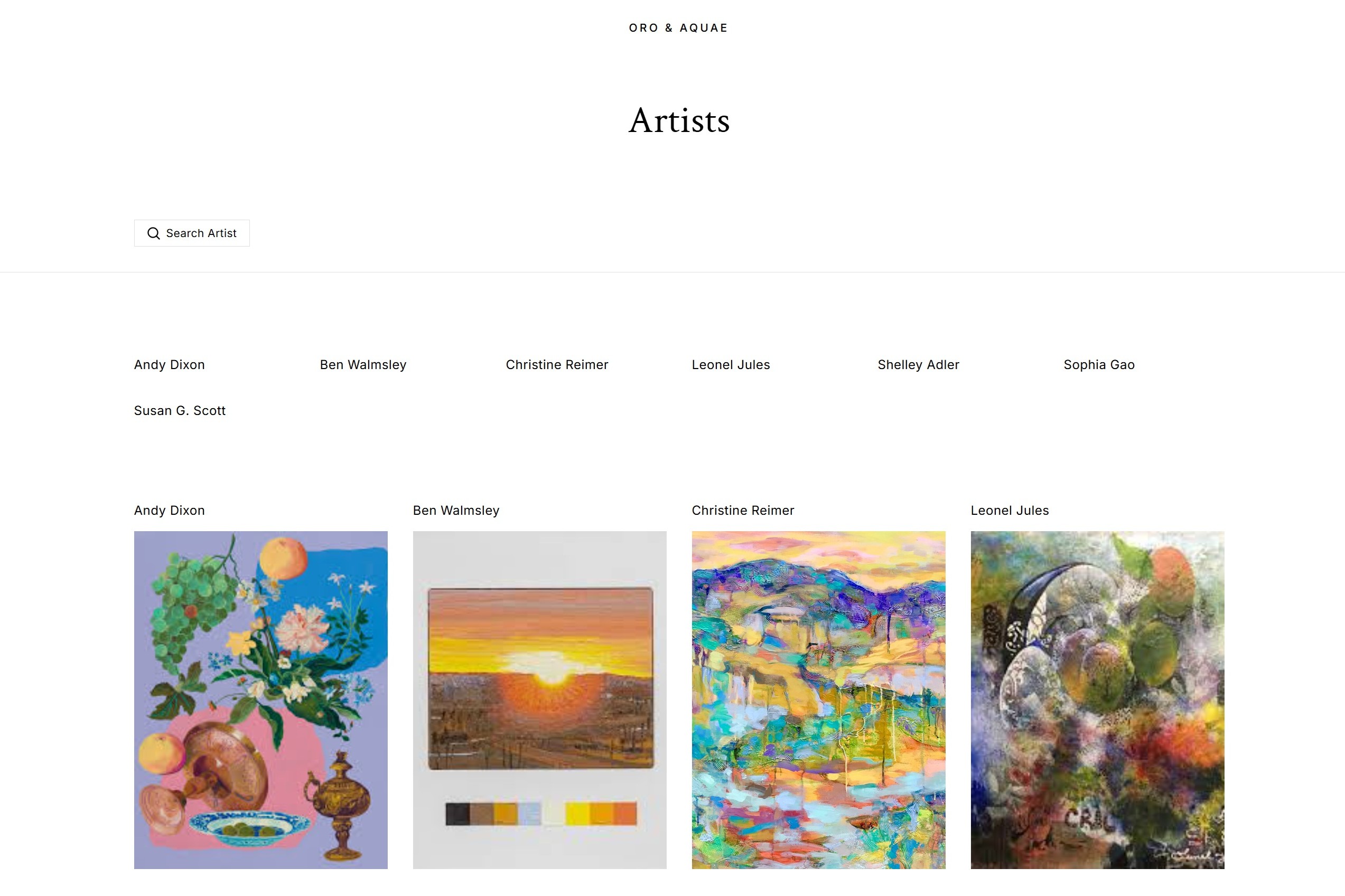
Oro & Aquae is a Contemporary Art Gallery. They function as a curator and retailer of high-end fine art.
The Product:
They sell original paintings and mixed media works. This site sells luxury goods where a single conversion could be worth thousands of dollars.
Target Audience:
Primary: Art Collectors (High-Net-Worth Individuals) who buy for investment or passion.
Secondary: Interior Designers and Architects looking for pieces for clients.
Tertiary: Art enthusiasts and other curators.
Goal:
To replicate the physical experience of a high-end "White Cube" gallery in a digital space. The goal is not high-volume traffic, but high-quality engagement that builds the prestige of the artists they represent.
2. Design Analysis from a Business Perspective
Aesthetic Style: "The Digital White Cube"
From a business perspective, the design is an exercise in Restraint.
The "Invisible" UI: The interface is stark white with black text. There are no borders, no drop shadows, and no decorative background elements. In the luxury art business, the website must recede so the art can come forward. Any "design flair" added to the UI would compete with the artwork, which is a business error.
Typography Pairing: Headings (Serif) signal elegance, tradition, and expensive taste. Body (Sans-Serif) signals modernity and functional minimalism.
Visual Hierarchy: The layout uses massive whitespace. In luxury marketing, Whitespace = Luxury. Cramped content implies "discount store." Vast open space implies "exclusivity."
3. Why We Designed It This Way (Design Intent)
The Split-Screen Artist Intros:
Feature: The screen is split 50/50—one side text, one side art.
Intent: Balancing the Persona and the Product. In the art world, you don't just buy a painting; you buy the artist's story. By placing them side-by-side with equal weight, the design tells the buyer: "The story and the visual are inseparable."
The "Lifestyle" Photography:
Feature: Photos of the artist standing next to her work in a gallery setting, rather than just flat scans of the canvas.
Intent: Scale and Aspiration. Flat scans of paintings are abstract—it's hard to tell how big they are. Showing the artist next to the work instantly communicates Scale and Context. It also humanizes the artist, making the purchase feel like a personal connection rather than a transaction.
The Prominent "Search Artist" Bar:
Feature: A very clear, isolated search button and bar.
Intent: Catering to Professional Buyers. Interior designers and serious collectors often come to a site looking for a specific name. They don't want to browse randomly. This feature respects the time of high-intent buyers.
The "Other Artists" Footer:
Feature: A grid of other artist thumbnails at the bottom of a profile.
Intent: Recirculation & Cross-Selling. If a user decides "this isn't for me," the design immediately offers alternatives to keep the user in the ecosystem.
4. How This Design Helps Achieve Goals
Goal: Justifying Premium Pricing
How the design helps: High prices require "High Trust" design. If the font kerning was messy or the layout cluttered, a user would subconsciously doubt the authenticity of a $5,000 painting. The flawless, museum-quality typography convinces the buyer that this is a legitimate, high-end establishment.
Goal: Selling to Interior Designers
How the design helps: Designers need to envision how a piece fits in a room. The clean backgrounds and color-accurate imagery allow designers to easily copy-paste these images into their own mood boards for clients.
Goal: Artist Representation
How the design helps: A gallery's job is to elevate the status of their artists. By giving each artist a dedicated "Exhibition Page" feel, the website treats every artist like a star. This keeps the artists happy and attracts new talent to the gallery.
Cornerstone Design Strategy
1. Company & Organization Analysis
Who They Are:
CornerStone is a premium stone fabricator and installer, specializing in custom countertops, cabinetry, and cladding. They have been in business for over 10 years.
The Product:
They sell high-end finishings: Granite, Marble, Quartz, and Porcelain surfaces. They also offer cabinetry and furniture. This is not a "big box" hardware store; this is a bespoke fabrication service.
Target Audience:
Primary: Affluent homeowners undertaking renovations who value aesthetics over the lowest price.
Secondary: Interior Designers and Architects looking for reliable fabrication partners who understand luxury.
Goal:
To move away from being seen as just "contractors" and position themselves as "artisans." They want to capture high-ticket leads where the client is looking for a curated experience, not just a commodity installation.
The design creates a deliberate atmosphere of sophistication.
Visual Metaphors: The Hero section doesn't show a construction site or a man in a hard hat (which is typical for this industry). Instead, it shows ingredients, a knife, and a pomegranate on a marble surface. This shifts the focus from "Construction" to "Living." It sells the dream of the kitchen, not the labor of the installation.
Typography: The use of a delicate Serif font for headings (e.g., "Dream to Reality," "Your Vision Into Reality") pairs with a clean Sans-Serif for body text. This is the typography standard for fashion and lifestyle magazines, signaling to the user that this brand cares about beauty, not just utility.
High-Key Photography: The site is flooded with light. The photography is bright, airy, and clean. In the stone industry, seeing the details of the vein and texture is critical. The white background acts as a gallery wall, allowing the stone patterns to take center stage.
3. Why We Designed It This Way (Design Intent)
The "Objection Handling" Feature Cards:
Feature: Three vertical images showing a knife (Scratch Resistance), a cup/stain (Stain Resistance), and a hot pot (Heat Resistance).
Intent: Visual Reassurance. The biggest barrier to buying expensive stone is the fear of ruining it. Instead of writing a technical paragraph about "Mohs hardness scale," the design uses intuitive imagery to instantly answer the customer's anxiety: "Yes, you can cook on this. Yes, you can spill wine on this."
The "Brand Ticker" (Luxe, Caesarstone, Silestone, etc.):
Feature: A scrolling or grid display of partner logos.
Intent: Trust by Association. CornerStone is a local business, but the suppliers they use are global giants. By prominently displaying these logos, they borrow the credibility of multibillion-dollar brands. It tells the customer, "We don't use cheap filler; we use the best materials on earth."
The Simplified Process Icons (Consult -> Select -> Sample -> Delivery):
Feature: Bold, black icons outlining a 4-step workflow.
Intent: Reducing Friction. Custom renovation is intimidating. Clients worry about timelines, hidden costs, and mess. By reducing the entire engagement to four simple steps, the design makes the process feel manageable and predictable.
The "Piano" Image in the 'Who We Are' Section:
Feature: A grand piano on a marble floor next to the "About Us" text.
Intent: Lifestyle Anchoring. This image has nothing to do with countertops, but everything to do with the target demographic. It signals culture, wealth, and elegance. It frames the stone product not as a kitchen surface, but as an essential element of a high-class home.
How the design helps: The "Free Consultation" button is treated as a premium invitation rather than a sales pitch. The minimalist, expensive-looking design acts as a filter. It likely repels bargain hunters looking for cheap laminate, while attracting clients willing to pay for "Bespoke Stonework."
How the design helps: The "Residential Customization" grid displays Countertops, Cladding, Cabinets, and Furniture side-by-side with equal visual weight. This informs the user immediately that CornerStone is a one-stop-shop for the entire room, increasing the potential "Average Order Value" per client.
Goal: Building Trust in Craftsmanship
How the design helps: The FAQ section ("How does CornerStone ensure quality?") is placed prominently. Combined with the high-resolution close-ups of the stone textures, the design provides "Proof of Quality" before the user even speaks to a sales rep.
Ordo Saxum Design Strategy
1. Company & Organization Analysis
Who They Are:
Ordo Saxum is a Toronto-based high-tech stone fabrication studio. While they sell traditional natural stone (marble, granite), they have a heavy emphasis on Sintered Stone (engineered stone) and precision manufacturing.
The Product:
They operate on two fronts:
Architectural Surfaces: Cladding, countertops, and flooring for luxury homes and offices.
Bespoke Furniture: They treat stone as a medium for furniture, selling finished dining tables, coffee tables, and accessories directly to the consumer.
Target Audience:
Primary: Ultra-High-Net-Worth homeowners who prefer a "Modern/Minimalist" aesthetic over a traditional one.
Secondary: Architects and Interior Designers looking for fabrication partners capable of complex, high-precision cuts (using CNC and waterjet technology).
Unique Value Proposition:
Unlike a traditional stone yard that sells "nature," Ordo Saxum sells "Precision." They market themselves as a laboratory of stone, combining geology with advanced engineering.
The design differentiates itself sharply from the typical "warm and homey" kitchen renovation site (like the previous CornerStone example).
The "Dark Mode" Mood: The Hero section and several product showcases utilize deep shadows, moody lighting, and stark contrasts. This borrows from the branding of luxury automotive companies (like Bentley or Aston Martin) or high-end horology (watchmaking). It signals masculinity, precision, and drama.
Visual Fidelity: The site relies heavily on what appear to be 3D Renderings rather than just photography. The lighting is too perfect, the reflections too sharp. This suggests that they are selling a vision of the future, not just a documented past.
Typography: The typeface is a very sharp, high-contrast Serif (reminiscent of fashion mastheads like Vogue), paired with a technical Sans-Serif. This combination communicates: "We have the taste of an artist and the discipline of an engineer."
3. Why We Designed It This Way (Design Intent)
The "Floating Slab" & Particle Effects:
Feature: A section showing a stone slab floating in a void with gold dust/particles around it.
Intent: Elevating the Material. Most competitors show stone sitting on a dusty A-frame truck. Ordo Saxum treats the slab like a monolith from 2001: A Space Odyssey. It creates a sense of awe and reverence for the raw material, justifying a premium price tag.
The "Factory Floor" Gallery:
Feature: High-resolution photos of clean, bright industrial machinery (CNC machines, robotic arms) under "Fabrication Mastery."
Intent: Proof of Competence. In the stone industry, "fabrication" usually means a guy with a hand grinder creating dust. Ordo Saxum shows a clinical, laboratory-like environment. This assures the architect that their complex, millimeter-perfect design will be executed flawlessly. It removes the fear of human error.
The "Furniture Anatomy" 3D Model:
Feature: A 3D model of a stone table with the caption "The Anatomy of Precision" and "Drag to Rotate."
Intent: Productizing the Service. By allowing the user to rotate the table, they move away from selling "custom contracting" (which is hard to buy) to selling a "finished product" (which is easy to buy). It mimics the e-commerce experience of buying an Apple product or a Tesla.
The "George Santayana" Quote:
Feature: A quote about family being nature's masterpiece, overlaid on a warm family image.
Intent: Emotional Counter-Weight. The site is very cold, industrial, and sharp. Without this section, it might feel sterile. This content injects warmth and humanity, reminding the buyer that this cold stone is meant to host warm family dinners.
4. How This Design Helps Achieve Goals
Goal: Selling Sintered Stone (New Technology)
How the design helps: Sintered stone is a printed/engineered product that can feel "fake" if marketed poorly. The website's focus on "Engineering," "Science," and "Mastery" reframes "Artificial" as "Superior." It positions the material as an upgrade to nature, not a cheap copy.
How the design helps: The "Beautiful Offices" carousel showcases massive boardroom tables and lobby desks. This signals to corporate buyers that Ordo Saxum has the capacity to handle large-scale commercial installations, not just residential kitchen islands.
Goal: Justifying the "Studio" Markup
How the design helps: Ordo Saxum likely charges significantly more than a local granite cutter. The web design, which looks like an art gallery or a fashion house, creates a Premium Brand Halo. The user subconsciously accepts that "Ordo Saxum" is a luxury label, making them less price-sensitive during the quoting process.
WYSS Singapore Design Strategy
1. Company & Organization Analysis
Who They Are:
WYSS (The operating brand of Shanghai Liangling Mechanical & Electrical Equipment Co., Ltd) is an Engineering, Procurement, and Construction (EPC) partner specializing in high-end thermal and energy infrastructure.
What They Do:
They operate at the heavy end of the HVAC spectrum. This isn't residential air conditioning; this is District Cooling, Ice Thermal Storage, and Data Center Cooling.
Engineering: Designing complex energy centers (Regional Energy Centers).
Distribution: Authorized distributors for top-tier global brands like BAC (Baltimore Aircoil Company), YORK, and Grundfos.
Service: Full lifecycle facility management.
Target Audience (B2B):
The "Capex" Buyer: Property developers and investors building skyscrapers or industrial parks.
The "Opex" Buyer: Facility managers needing maintenance or energy optimization to lower running costs.
Specialized Sectors: Data Center (IDC) operators and Government infrastructure projects.
2. Design Analysis from a Business Perspective
Aesthetic Style: "The Industrial Luxury Boutique"
The design is surprisingly elegant for an engineering firm.
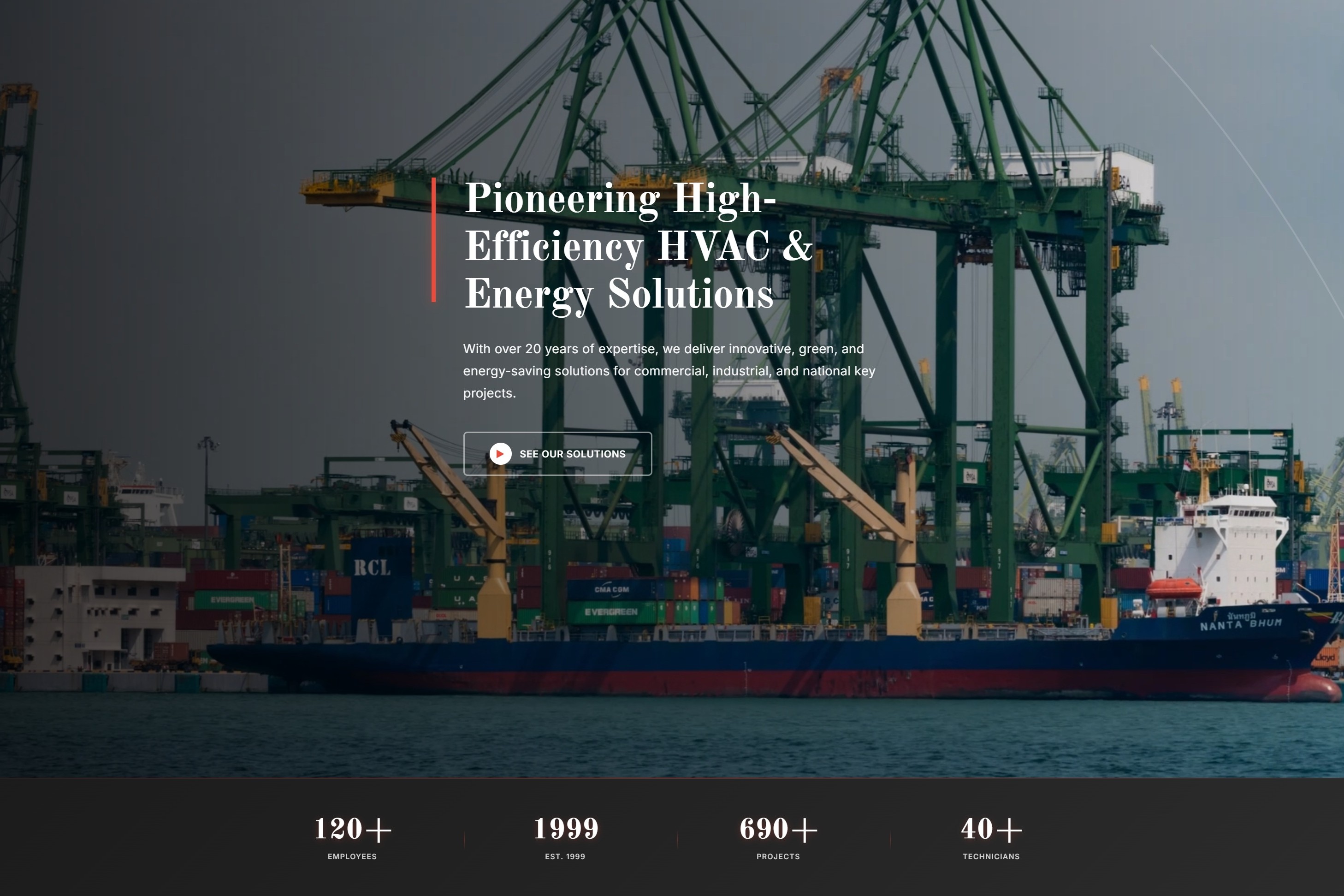
Typography: The use of a High-Contrast Serif Font for headlines signals that they are a Premium Consultant, not just a blue-collar contractor. It gives the brand a "White Collar" feel.
Color Palette: Steel & Chrome dominate (greys, silvers, cool blues), reflecting the materials they work with. Safety Orange for buttons mimics high-visibility safety gear.
Feature: A dark band listing years, employees, and project counts (120+ Employees, 690+ Projects).
Intent: Risk Mitigation. In B2B construction, the biggest fear is the contractor going bankrupt mid-project. By explicitly stating "Established 1999" and "Registered Capital," the design screams Solvency and Stability.
The "Numbered Red Badges" (01, 02, 03):
Feature: Red floating bubbles numbering the sections.
Intent: Process Visualization. Numbering suggests a Systematic Approach. It tells the client, "We have a process. We are organized."
The Brand Association Strategy:
Feature: Dedicated sections for "BAC Heat Rejection" and "Grundfos Fluid Conveyance."
Intent: Credibility. WYSS is a regional entity, but BAC and Grundfos are global giants. By dedicating screen real estate to these partners, WYSS positions itself as the "Exclusive Gateway" to world-class technology.
The "Technical" Tags:
Feature: Small rectangular tags like "Energy Optimized," "Hydraulic Efficiency."
Intent: Engineer-to-Engineer Communication. These tags signal that WYSS speaks the technical language required to spec these projects.
How the design helps: The "Project Portfolio" explicitly includes an "IDC" filter. By isolating this category and showing high-tech server room imagery, the design proves they understand the specific, zero-tolerance needs of the tech sector.
Goal: Justifying a Premium Price Point
How the design helps: The Serif Typography is the heavy lifter here. The editorial, magazine-style typography frames their engineering solutions as "Bespoke" and "High-Value," allowing them to charge for expertise, not just labor.
Goal: Educating Clients on New Tech (Ice Thermal Storage)
How the design helps: The Split-Panel Layout educates the client on the financial benefit right next to the image of the massive tanks, making the upsell easier.
JR Hardscaping Design Strategy
1. Company & Organization Analysis
Who They Are:
JR Hardscaping is the specialized consumer-facing execution arm of JR Stone Elite Ltd., operating under the broader JR Partners corporate ecosystem. While the parent group manages the vertical supply chain, JR Hardscaping is the "boots on the ground"—the premium division responsible for the physical installation and engineering of high-end outdoor projects in the Greater Toronto Area (GTA).
What They Do:
They deliver Engineered Outdoor Living Solutions. Unlike generic landscapers who focus on planting or basic paving, JR Hardscaping positions itself as a Technical Hardscaping Specialist.
Structural Engineering: Retaining walls with geogrid reinforcement and hydrostatic pressure management.
Advanced Systems: Hydronic snow-melt infrastructure and TSSA-certified gas line integrations.
Premium Material Integration: Installation of natural stone, porcelain, and architectural concrete, leveraging their internal supply chain for quality control.
Target Audience:
Primary: Affluent Homeowners (Property value $2M+) in areas like Vaughan, Richmond Hill, Oakville, Rosedale, Forest Hill, and North Toronto.
Strategic Demographic: The design explicitly targets the Canadian Wealth Demographic, a significant segment of the GTA luxury real estate market that values property investment and multigenerational family safety.
Gatekeepers: Architects and Custom Home Builders seeking a reliable execution partner.
The Business Goal:
To position JR Hardscaping as the "Porsche of Hardscaping"—the engineered, premium choice. The goal is to move the conversation away from "price per square foot" and toward "Long-Term Asset Value."
2. Design Analysis from a Business Perspective
Aesthetic Style: "Engineered Elegance"
The design language fuses Technical Authority with Luxury Lifestyle.
Color Palette: A sophisticated, masculine base of Deep Charcoal (#2d2d2d) and warm stone tones, punctuated by a Burnt Orange (#f97316) accent. This orange evokes fire features and industrial safety, subtly reinforcing the brand's construction roots while remaining elegant.
Typography: A clean, bold Sans-Serif hierarchy. It prioritizes readability and strength, avoiding the "handwritten" fonts often used by smaller landscapers, opting instead for an architectural look.
Photography-First Layout: The site eschews stock photography for high-resolution, project-specific imagery. It highlights texture, joinery, and scale, acting as a digital portfolio rather than a brochure.
The "Luxury Marketplace" Layout:
The interface mimics a High-End Showroom, not a service directory.
Service Categorization: Instead of a flat list, services are grouped into three strategic pillars:
Hardscape Craftsmanship (The Core: Driveways, Patios).
Outdoor Living Aesthetics (The Dream: Kitchens, Fire Features).
Professional Technical Support (The Science: Drainage, Grading).
Material Authority: The "Carefully Selected Global Premium Stone" section mimics a luxury fashion house or automotive configurator, treating the stone as a curated collection rather than a raw commodity.
3. Why We Designed It This Way (Design Intent)
The Bilingual Strategy (English + Simplified Chinese):
Feature: A complete, culturally adapted parallel site structure.
Intent: Market Penetration. The GTA has a massive Chinese-speaking luxury homeowner population. The translation is not literal; it is Cultural Adaptation.
English: Focuses on "Architectural Asset" and "ROI."
Chinese: Focuses on "Enduring Value," "Family Safety" (守护家人安全), and "Face/Status." This builds deep trust and creates a "blue ocean" where few competitors can follow.
The "Problem-Agitation-Solution" Hero Sequence:
Feature: The opening headline isn't "We do hardscaping." It is: "Salt destroys your stone. Ice destroys your hips."
Intent: Emotional Anchoring. This uses copywriting psychology to trigger a pain point (winter safety/damage) before offering the high-ticket solution (Hydronic Snow Melt Systems). It sells the outcome (safety/ease), not the product (pipes).
The Dual-Track Call to Action (CTA):
Feature: Every section offers two buttons: "Get a Quote" (Primary/Orange) and "Explore Products" (Secondary/Outline).
Intent: Respecting the Sales Cycle. High-ticket renovations have a long consideration phase. The secondary button captures users who are in "Research Mode," keeping them on the site longer without forcing a premature sales commitment, thereby reducing bounce rates.
Social Proof Architecture:
Feature: A high-contrast "Stats Bar" (20+ Years, 98% Satisfaction) and Schema-marked reviews embedded in the code.
Intent: Trust Velocity. By placing quantitative proof before the detailed content, we establish baseline credibility immediately. The testimonials are strategically selected to address specific fears: one for Aesthetics, one for Engineering/Drainage, and one for Regulatory Compliance.
4. How This Design Helps Achieve Goals
Goal: Justifying Premium Pricing
How the design helps: The use of Engineering Terminology ("Freeze-Thaw Resistance," "Hydrostatic Pressure," "TSSA Certified") creates an intellectual moat. It signals that this is complex work requiring a specialist. A client reading this content understands that a cheaper quote likely means "cutting corners" on these invisible engineering standards.
Goal: Pre-Qualifying Leads
How the design helps: The site functions as a filter. By using "Consultation" language and showcasing high-complexity projects (like terraced retaining walls), it intimidates "tire kickers" looking for a cheap patch job. It attracts only those clients who value—and can afford—a comprehensive design-build approach.
Goal: Leveraging Vertical Integration
How the design helps: By explicitly linking materials to "Global Premium Stone" sources, the design subtly reinforces the JR Partners advantage. It implies: "We control the stone supply, so you won't have delays." This is a massive selling point for developers and homeowners tired of supply chain excuses.
Goal: SEO Dominance
How the design helps: The bilingual structure effectively doubles the site's keyword footprint. It allows JR Hardscaping to rank for high-volume English keywords ("Interlocking Driveway Toronto") and high-intent, low-competition Chinese keywords ("多伦多高端硬景观"), capturing a lucrative niche market entirely.
JR Partners Design Strategy
1. Company & Organization Analysis (The Strategic Context)
Who They Are:
JR Partners establishes itself here not just as a holding company, but as the Central Orchestrator of the built environment. They are the strategic interface between the client and the specialized trades (Stone, Cabinetry, Windows, Landscaping).
The Business Model:
They operate a Vertically Integrated Ecosystem.
The Problem: Construction is usually fragmented. You hire an architect, then a builder, then a stone guy, then a cabinet guy. Communication breaks down, timelines slip, and blame shifts.
The JR Solution: "Six specialized divisions working in harmony." They own the supply chain, meaning they own the timeline and the quality.
Target Audience:
Primary: High-Net-Worth Individuals (HNWI) building custom homes who fear construction nightmares.
Secondary: Architects and Developers who need a reliable execution partner that won't embarrass them.
Core Value Proposition:
"Integrated Excellence." They are selling synergy—the idea that the stone team talks to the cabinet team before installation, preventing costly errors.
2. Design Analysis from a Business Perspective
Aesthetic Style: "Corporate Architect"
The design language balances the humanity of design with the precision of engineering.
Visual Hierarchy & Whitespace:
The site uses significantly more whitespace than a typical construction site. This "breathing room" signals luxury and organization. Clutter = Cheap/Chaotic. Whitespace = Expensive/Calm.
Typography Pairing:
Headlines (Serif): Large, bold Serif fonts (e.g., "Building Excellence," "A Refined Process"). This evokes the feeling of an editorial design magazine or a law firm. It signals Trust and Heritage.
Body Copy (Sans-Serif): Clean, geometric sans-serif for readability and technical details.
Color Strategy:
Monochrome Foundation: Black and white base for professionalism.
Safety Orange Accent: The strategic use of orange (in the "Integrated" text, buttons, and icons) serves two purposes:
Brand Identity: It links visually to the "JR" logo.
Industrial Nod: It subtly reminds the user that despite the luxury finish, this is still a construction company that wears safety vests and gets work done.
3. Why We Designed It This Way (Design Intent)
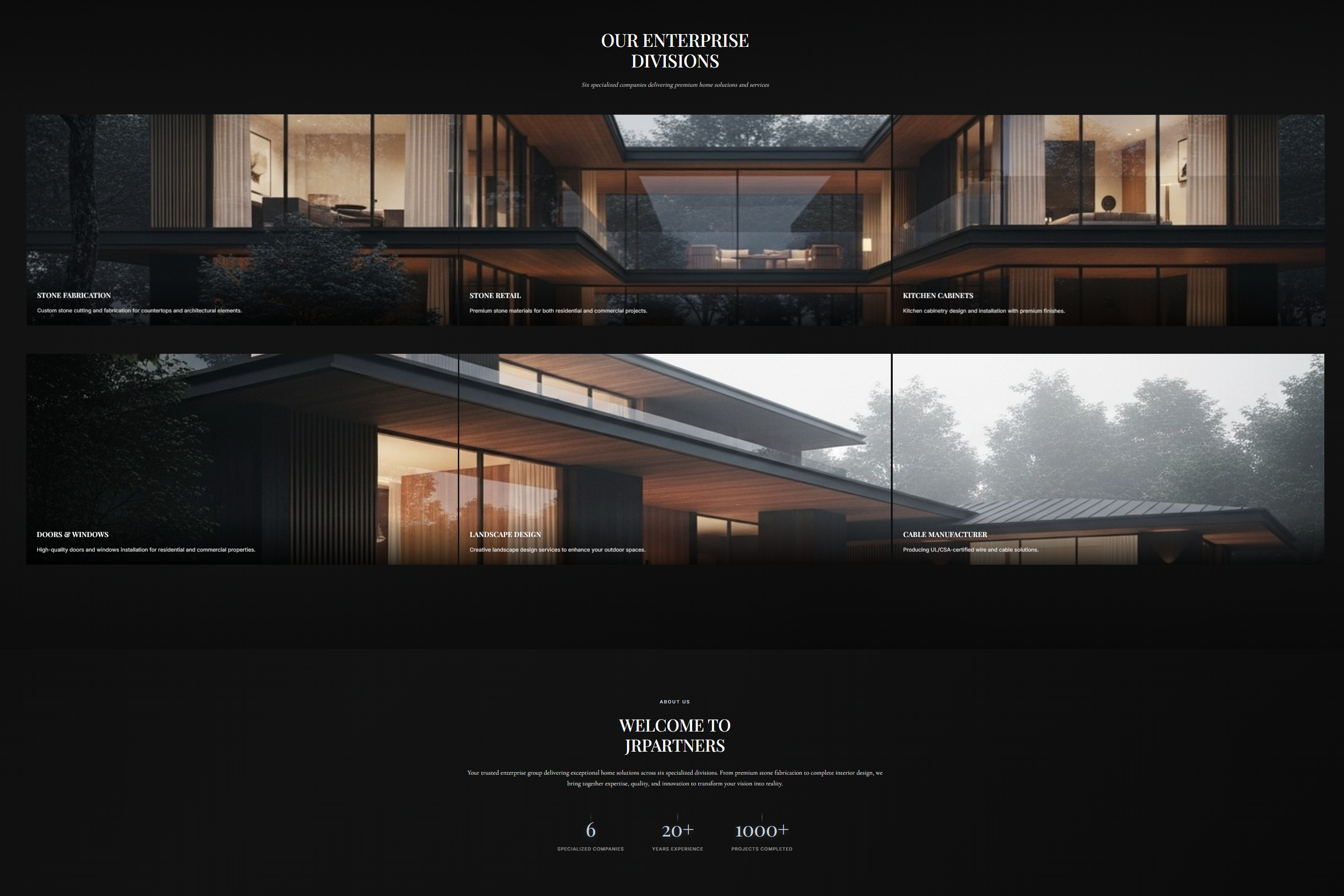
The "Six Divisions" Grid with Direct External Links:
Feature: The 3x2 grid showing "Stone Retail," "Stone Fabrication," etc., with links like "Visit LuxeStone" or "Visit OrdoSaxum."
Intent: The Portal Strategy. This section functions as a traffic controller. It acknowledges that JR Partners is the parent, but the children (subsidiaries) have their own brands. It validates the scope of the conglomerate without forcing the user to dig through menus.
Intent: Risk Mitigation. The biggest barrier to signing a construction contract is fear of the unknown. By explicitly mapping out the "Zero-Defect Walkthrough" and "White-Glove Installation," the design creates a mental roadmap for the client. It replaces anxiety with predictability.
The Hero Image (The "War Room" Shot):
Feature: The top image isn't a finished kitchen; it's an overhead shot of hands working on blueprints and models.
Intent: Selling the Brain, Not Just the Hands. Many competitors show a finished room. JR Partners shows the planning. This positions them as Consultants and Strategists first, and builders second. It justifies a higher fee structure because you are paying for their mindshare and coordination.
The "Project Details" Contact Form:
Feature: The contact form asks for "Service of Interest" and "Project Type" (dropdowns).
Intent: Automated Lead Qualification. This acts as a filter. It separates a homeowner needing a small repair (who might select a specific service) from a developer needing a full-scope contract. This data helps the sales team prioritize high-value leads immediately.
4. How This Design Helps Achieve Goals
Goal: Increasing Average Order Value (Cross-Selling)
How the design helps: The section "Technical Synergy & Design" explicitly states: "Because our divisions communicate... we solve complex coordination issues." This convinces the client to hire JR Partners for both cabinets and stone, rather than splitting the bid. The design makes "splitting the bid" look risky and "bundling" look safe.
Goal: Building "Enterprise" Authority
How the design helps: The "Legacy of Excellence" section citing "1000+ Projects" and "25+ Years" uses Quantitative Social Proof. In the B2B world (working with developers), these numbers are critical for insurance and bonding requirements. The design presents these stats clearly to pass the initial vetting process of large commercial clients.
Goal: Brand Differentiation (The "Adult" in the Room)
How the design helps: The "Core Values" section (Integrity, Excellence) might seem generic, but the way it is designed—clean, structured, minimal—reinforces the message. The design itself proves they are organized. In an industry known for messy trucks and missed calls, the polished UI tells the client: "We are professionals."
Goal: SEO & Local Dominance (from our previous strategy)
How the design helps: The footer and "About" sections mention "Greater Toronto Area," "Toronto Head Office," and specific addresses. The service pages are broken down individually (Stone, Cabinets, etc.), which creates perfect landing targets for specific keywords like "Custom Cabinetry Toronto" or "Stone Fabrication Vaughan," feeding the SEO strategy we discussed earlier.